EMPOWER LEARNERS WITH DYSLEXIA
Structured Literacy for Dyslexia Intervention
When learners with dyslexia struggle to read, their confidence suffers. Reading Horizons empowers students to internalize sounds, letters, and word patterns for improved reading outcomes—so no student falls behind.

Our explicit, systematic, and multi-modal dyslexia reading program—with our simple marking system—empowers learners with dyslexia to internalize English sounds, letters, and word patterns for improved reading outcomes.
Students with dyslexia often have difficulty developing essential reading skills due to the high cognitive processing load associated with traditional instructional methods. Our approach reduces this load by explicitly addressing phonemic awareness, word recognition, spelling, and decoding with effective reading instruction.
Understanding the Reading Brain
Dyslexia impacts every instructional task a student faces in school and, if left undiagnosed, it can negatively affect their entire life. Fortunately, there is a window of opportunity to improve outcomes for students with dyslexia at an early age. This eBook gives educators the blueprint.
Give Me Access!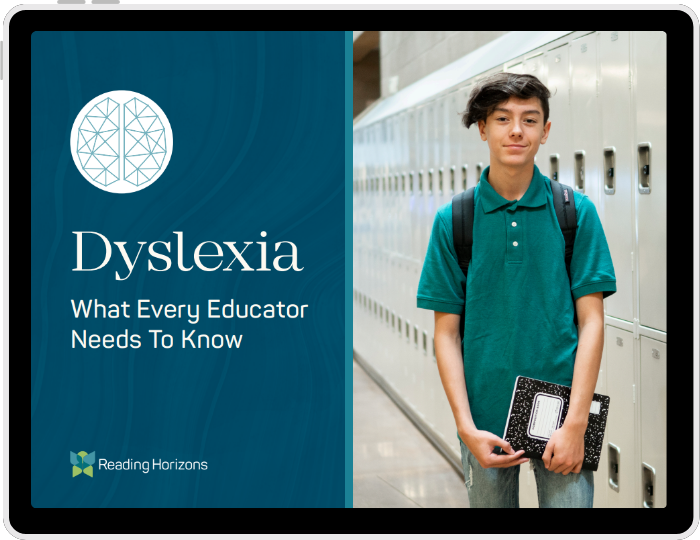
Unique Marking System to Recognize Patterns
Our marking system, a hallmark of Reading Horizons’ effectiveness, helps students with dyslexia recognize and internalize English sounds, letters, and word patterns they sometimes miss.
With our scripted lessons, educators at any experience level can effectively implement a reading intervention curriculum that is effective for students with dyslexia. When educators are confident, student outcomes grow.
Reading Horizons® is proud to have its foundational literacy programs endorsed by the Council of Administrators of Special Education (CASE). This endorsement solidifies Reading Horizons’ position as a trusted resource in special education, supporting administrators and educators in delivering high-quality reading instruction to all students, including those with special needs.
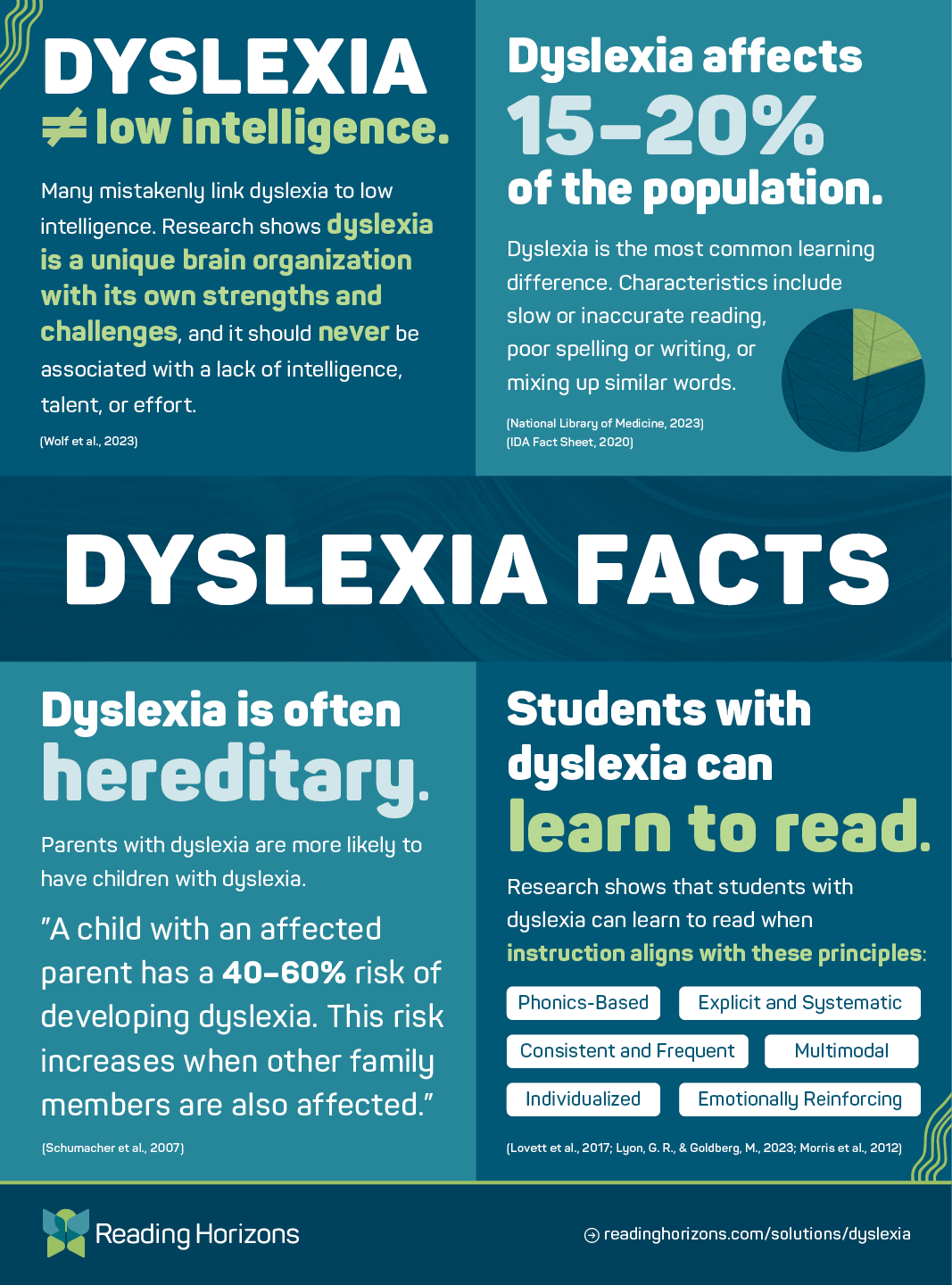
Free Resources
Hand-Picked for Dyslexia Admins and Educators


Depicting Dyslexia: Youth Advocate Michael Atkinson’s Inspiring Story and Advice
Is Reading Horizons aligned with IDA guidelines?
Yes. Reading Horizons is structured literacy-based and aligned with the International Dyslexia Association's Knowledge and Practice Standards. Our programs incorporate all five pillars of structured literacy: phonemic awareness, phonics, fluency, vocabulary, and comprehension.
What does structured literacy look like for students with dyslexia?
Structured literacy instruction is explicit, systematic, and sequential. That means direct instruction in phoneme-grapheme relationships, multisensory practice, immediate corrective feedback, and cumulative review — the exact approach Reading Horizons is built on.
What grades and settings does Reading Horizons support?
Our programs support learners in public, private, charter, and therapeutic educational environments across the country.
Does a student need a formal dyslexia diagnosis to use Reading Horizons?
No. Reading Horizons is designed for any student who struggles with decoding, phonics, or reading fluency — whether or not they have a formal diagnosis. The structured literacy approach benefits all learners, and is especially effective for students with dyslexia or dyslexia-like reading challenges.
How does Reading Horizons support teachers who work with dyslexic students?
Teachers receive structured professional development and ongoing coaching to deliver the program with fidelity. Our training builds confidence in teaching phonics and decoding explicitly — skills that make the biggest difference for students with dyslexia.
Is Reading Horizons research-based?
Yes. Reading Horizons is grounded in decades of reading science research and structured literacy best practices, including findings from Dr. Louisa Moats, the National Reading Panel, and the broader science of reading movement. Built on Charlotte Lockhart’s proven decoding methodology and refined through more than 40 years of classroom application, Reading Horizons uses an explicit, systematic approach to phonics and decoding that supports beginning readers, struggling readers, English learners, and students with dyslexia.
Can Reading Horizons be used alongside an existing IEP?
Yes. Reading Horizons is frequently used to support IEP goals related to decoding, phonics, and reading fluency. Our structured literacy approach aligns well with goals targeting phonological awareness, word recognition, and reading accuracy — and our team can help schools document progress toward those goals.
How long does it take to see results?
Many students show measurable gains in decoding and fluency within the first 8–12 weeks of consistent instruction. Results vary based on the student's starting point, instructional intensity, and program placement, but educators consistently report meaningful progress within a single school year.