By Shannon Bowles
Summer reading programs have the power to do more than simply prevent learning loss. When designed intentionally, they can build confidence, strengthen literacy skills, and help students reconnect with the joy of reading. The challenge, of course, is making all of that happen within a short window of time while keeping students engaged enough to show up consistently.
The good news? A focused and engaging summer reading program can make a meaningful impact—even in just a few weeks.
Here are five key strategies educators can use to create a summer reading program that supports reading growth and keeps students excited to participate.
Start With Clear Goals
Every successful summer reading program begins with intentional planning. Before building schedules or choosing activities, it’s important to define what success will look like.
Start by asking:
- Who is the program designed for?
- Which reading skills need the most support?
- How will growth be measured?
Assessment data can help guide these decisions. End-of-year benchmark scores, progress monitoring tools, and classroom observations all provide valuable insight into the skills students need most.
For younger students in grades K–2, summer instruction often focuses on foundational literacy skills such as phonemic awareness, letter-sound correspondence, and blending and segmenting sounds.
For students in grades 2–5, priority skills may shift toward decoding multisyllabic words, reading fluency, vocabulary development, and comprehension.
Programs are most effective when they focus on a manageable number of high-impact skills instead of trying to address everything at once.
A strong summer reading goal might look something like this:
Provide targeted literacy support for identified students to accelerate growth in key reading skill areas based on assessment data while increasing student engagement and participation in summer reading opportunities.
Clear goals help ensure instructional time is purposeful and measurable.
Prioritize High-Impact Reading Skills
Summer programs often operate within limited instructional time, which means every lesson matters.
Instead of attempting to cover too much content, focus on the reading skills that will create the greatest impact for students. Targeted instruction allows educators to maximize growth in a short timeframe.
Some of the most effective focus areas include:
- Phonics and Decoding
- Reading Fluency
- Vocabulary Development
- Reading Connected Text
- Comprehension
Taking time at the beginning of the program to conduct focused assessments can help educators pinpoint the exact subskills preventing student progress. For example, low phonemic awareness scores may signal a need for additional sound manipulation practice, while weak decoding performance can indicate the need for more targeted blending instruction. In some cases, fluency concerns may also emerge, calling for repeated reading and accuracy work to help students build confidence and automaticity.
The key is to narrow the focus and teach intentionally. In a short summer program, less is often more.
Use Small Groups to Differentiate Instruction
Summer reading programs often bring together students with a wide range of learning needs. Small-group instruction is one of the most effective ways to provide targeted support while maintaining student engagement. Within small groups, educators can deliver explicit instruction using an “I do, we do, you do” structure while tailoring instruction to student needs.
Effective small-group instructional practices include:
Make Learning Fun With Themed Weeks
One of the best ways to increase engagement during summer programs is by connecting reading instruction to high-interest themes.
Themed weeks transform reading into an experience that feels interactive, creative, and memorable.
Popular summer reading themes include:
- Animals
- STEM and Science
- Nature
- Community Helpers
- Mystery and Detective Stories
- Around the World
- Fantasy and Mythology
- Sports and Teamwork
A simple framework for organizing themed instruction is:
Read → Explore → Create → Share
Here is an example of an Animal Discovery Week.
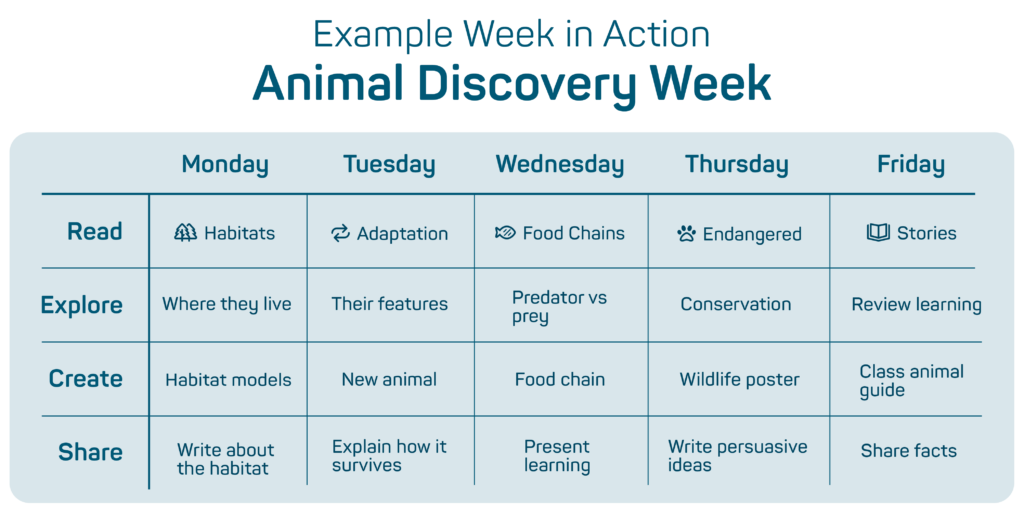
Themed learning helps students build background knowledge, expand vocabulary, and make meaningful connections between reading and the world around them.
Most importantly, it makes reading feel exciting.
Design for Engagement and Attendance
Attendance is one of the biggest challenges summer programs face. Students cannot benefit from instruction if they are not present, so engagement must be built into the program design.
Successful programs create an environment students genuinely want to attend.
Here are several ways to boost motivation and participation:
When students are engaged, attendance improves—and learning accelerates.
Even a Short Summer Program Can Make a Big Impact
A well-designed summer reading program does not need to last all summer to be effective. Even within a few short weeks, educators can create meaningful opportunities for reading growth through intentional instruction, targeted intervention, and engaging learning experiences.
The most successful programs:
- Begin with clear goals.
- Prioritize high-impact literacy skills.
- Use small-group instruction to meet student needs.
- Build engagement through meaningful themes and activities.
- Create a learning environment students are excited to attend.
When reading becomes connected to creativity, exploration, and success, students are more likely to stay engaged—and more likely to continue growing as readers long after summer ends.
Additional Resources:
How to Run a Successful Summer Reading Program in 24 Days (or Less)
The 3 Essentials of an Effective Summer Reading Program: How to Choose the Right One
3 Tips to Avoid Summer Reading Loss: From Flipping Channels to Turning Pages