by Stacy Hurst
This post is Part 5 of a six-part series, “Inside the RH Method,” exploring how the science of reading connects to daily classroom practice.
The Concept Behind Sound-Spelling Walls Isn’t Just a Trend
Let me start with this: they should be called sound-spelling walls—not just sound walls. That distinction matters. Reading development follows a speech-to-print- back to speech progression, and the name should reflect that.
I know walls can come and go as classroom “trends,” (in the early 2000’s I had a word wall that was enviable) but the concept behind sound-spelling walls is not a trend at all. It’s a scaffold—an essential support for children as they learn to map sounds to letters. If we reduce them to the latest fad in classroom décor, we miss their real purpose.
When used well, sound-spelling walls aren’t just posters on the wall. They’re daily, living tools that help students climb toward independence in reading and spelling by giving them an anchor for connecting sounds to spellings. That’s the real work of reading.
The Problem: A Disconnect Between Sounds and Symbols
One of the steepest hurdles beginning readers face is the mismatch between what they hear and what they see. In English, some phonemes can be spelled many different ways. Without a structured scaffold to map these connections, students often guess, memorize, and miss the patterns that make our writing system work.
And if teachers post a sound wall without clear instruction behind it, the wall can become nothing more than wallpaper. Students may match words to pictures but never grasp the deeper phoneme-grapheme connection.
The RH Way: Sound-Spelling Walls With Purpose
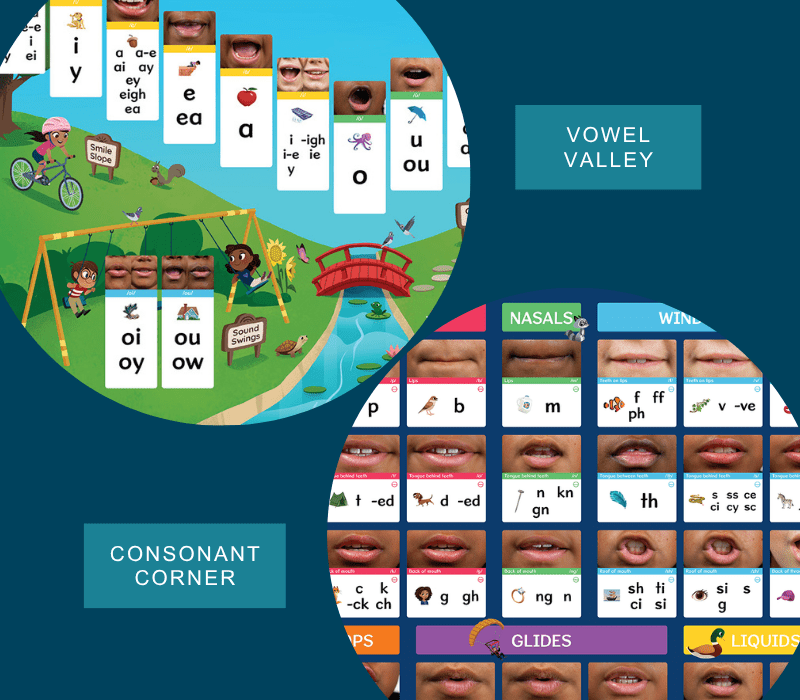
With the Reading Horizons Method, sound-spelling walls are not an accessory. They’re a scaffold built right into systematic instruction. Every new phoneme is introduced sequentially and explicitly alongside the graphemes that represent it. Students don’t just see a card on the wall—they learn how to say the sound, how to mark the vowel or consonant, and how it functions in actual words.
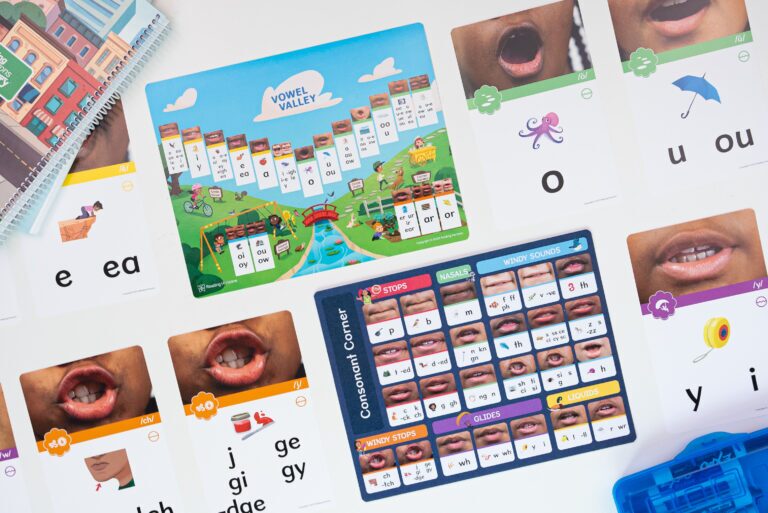
This process facilitates orthographic mapping, where repeated practice of saying the sound, seeing the letters, and applying the pattern makes it stick in the brain for automatic recognition in the future.
Reading Horizons also offers a digital sound-spelling wall, which I use with my preservice teachers. It’s a practical way to help them organize the 44 phonemes of English and connect the spellings that go with them. The same scaffold helps elementary students make better sense of English spelling patterns, giving them a systematic reference instead of leaving them to guess.
Practical Ways to Use Sound-Spelling Walls
Sound-spelling walls work best when they’re active and interactive:
- Refer to the wall during direct instruction and dictation.
- Have students point to sounds they hear during segmentation practice.
- Add or move grapheme cards as new spellings are introduced.
- Connect new sounds to known words from earlier lessons.
- Remember that a sound-spelling wall is a scaffold-the goal is orthographic mapping.
In short, the wall isn’t a static display—it’s a scaffold for thinking, analyzing, and reinforcing the speech-to-print relationship.
Read Part 4 in the series or move on to the final post in the series, Part 6.
Final Thoughts
Sound-spelling walls are not a silver bullet, but they are a powerful scaffold in structured literacy instruction. They help teachers move beyond guessing and memorizing, toward building the cognitive architecture of reading itself.
Trends may come and go, but this concept—the bridge between sounds and spellings—should always remain central to how we teach children to read.
Try the RH Method’s approach to sound-spelling walls with the free Teacher Edition today!