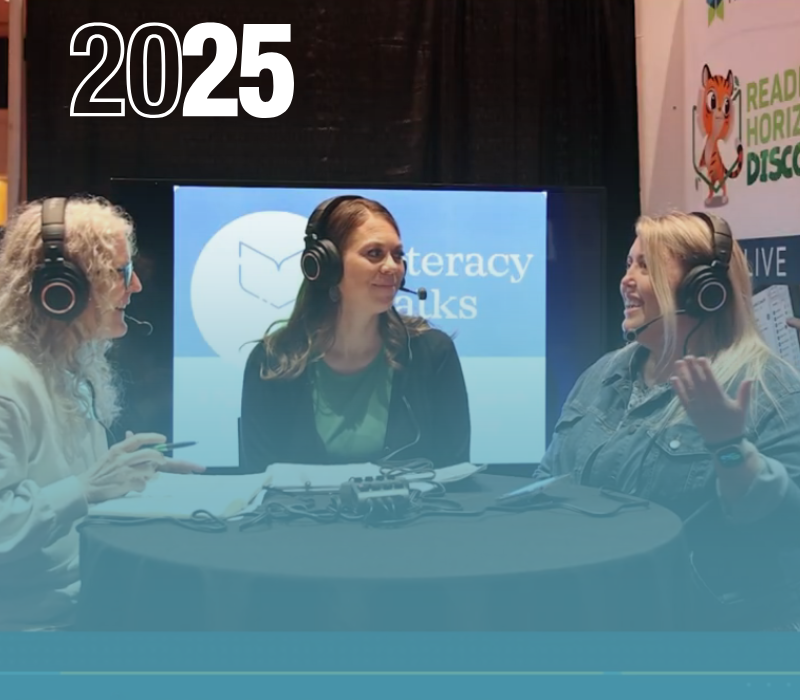
As we wrapped up our latest season of Literacy Talks, we took a moment to reflect on what 2025 brought to the world of literacy instruction—and what we hope to see in 2026. In this episode, we each shared our personal and professional highlights, pinpointed what’s on its way out, spotlighted what’s trending, and opened up our wish lists for the year ahead.
2025 Literacy Highlights
This year brought meaningful shifts in literacy education, starting with broader adoption of structured literacy principles. Many educators moved past just focusing on phonics and embraced a fuller view of the science of reading. We saw richer conversations around language, syntax, writing, and comprehension.
Another milestone: the International Dyslexia Association’s new definition of dyslexia now updated on their website, which includes deeper consideration of the social, emotional, and lifelong impacts of dyslexia.
In higher ed, we’re seeing tangible progress. Stacy reported a 93% pass rate on the Foundations of Reading Test for her students—evidence that change is taking root where future teachers are trained.
What’s Out in 2025
We didn’t hold back when it came to what’s officially out. Here’s our collective “goodbye” list:
- Three cueing systems: No more guessing strategies—decode first.
- Oversized phonemic awareness instruction: Especially when taught in isolation.
- Treating the science of reading like a trend or label: It’s a body of research, not a buzzword.
- Teacher-proof curricula: No program replaces deep professional knowledge.
- The “wait and see” approach: Intervention must start early.
- Disjointed instruction: It’s time to integrate, not isolate.
What’s In for 2026
Looking forward, here’s what we’re excited to see gaining traction:
- Writing instruction: It’s the pinnacle of literacy and deserves a central role.
- Tier 1 instruction: Solid, preventive first-line instruction in an MTSS framework.
- Integration across literacy strands: Language, comprehension, vocabulary, and writing working together.
- More actual reading: Students need more time with meaningful texts.
- Data-driven decisions: Assessments that inform, not overwhelm.
- Explicit instruction: Inspired by Dr. Anita Archer’s timeless principles.
Our Predictions
We’re predicting smarter implementation, increased clarity around instruction and intervention, and better use of AI as a teaching “sparring partner.” But we’re also seeing early signs of a pendulum swing away from screen-heavy instruction in early grades.
Our 2026 Wish List
We wrapped with some heartfelt hopes:
- Better support for teachers through materials, training, and time.
- Stronger commitment from districts to reflect priorities in budgets.
- Rigorous teacher preparation programs with demonstrated competencies.
- More access to rich, varied texts in every subject and every grade level.
Resources and Mentions
- IDA’s New Definition of Dyslexia
- Rock Your Literacy Block by Lindsay Kemeny
- Seven Mighty Moves by Lindsay Kemeny
- The Reading League Higher Ed Conference
- Dr. Anita Archer’s work on Explicit Instruction